
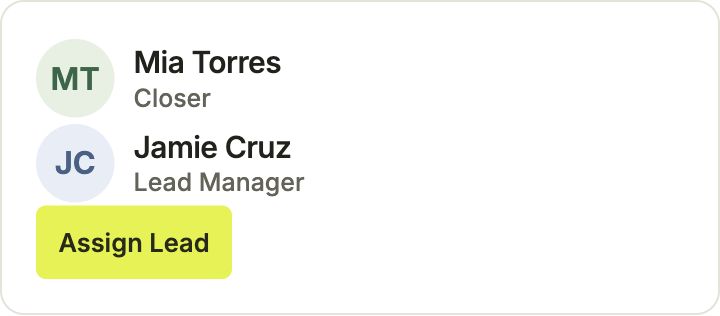
Separate lead and deal ownership
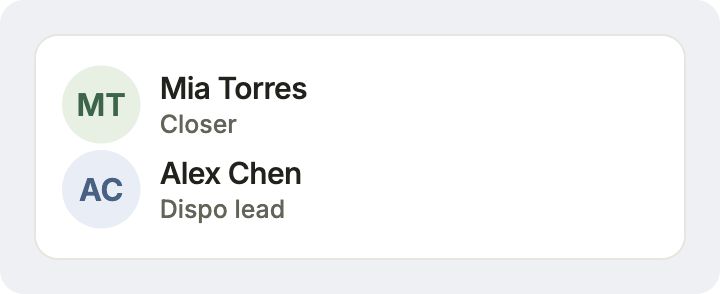
The lead manager qualifies the seller. The acquisitions rep, or closer, owns the deal through pricing, negotiation, and the purchase agreement.
Team Workspace
Keep lead owners, deal owners, and task assignees clear. Teammates can open the same record when work changes hands.
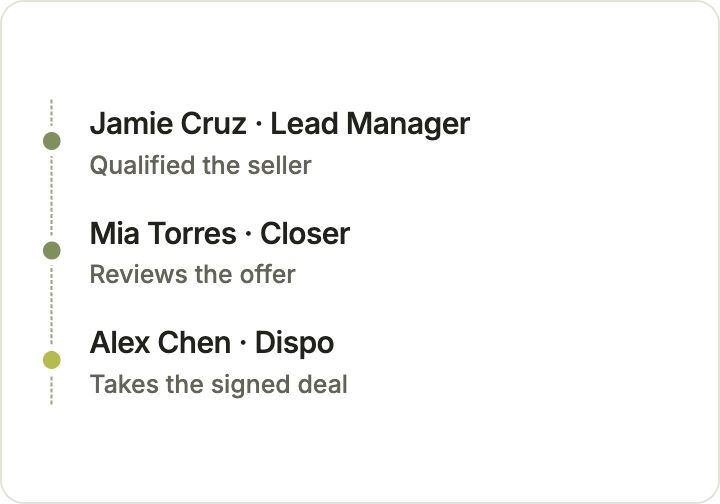
The lead manager qualifies the seller. The acquisitions rep, or closer, owns the deal through pricing, negotiation, and the purchase agreement.
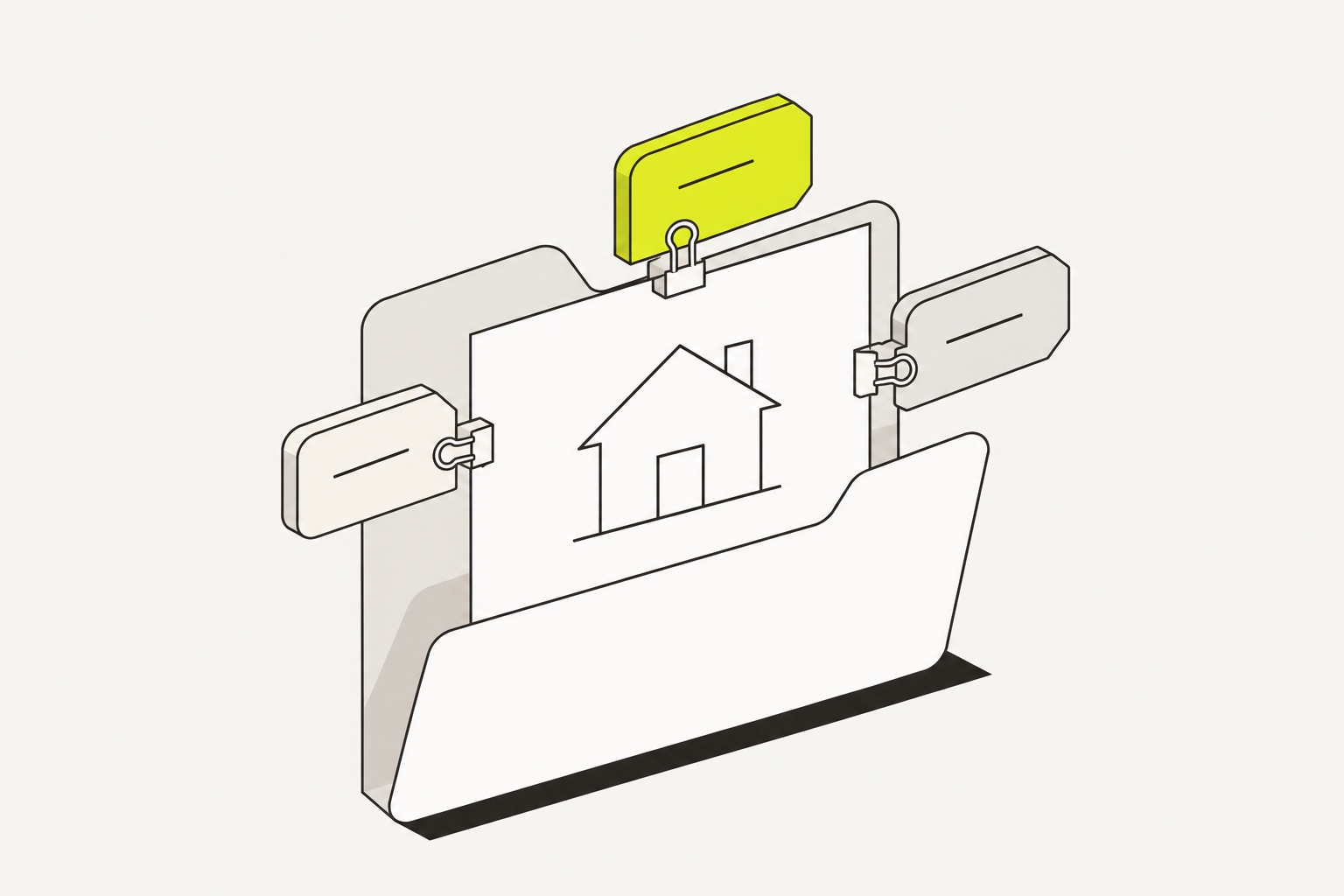
The dispositions rep handles the buyer side. The transaction coordinator (TC) tracks documents and deadlines. Both can work from the property’s notes and files.
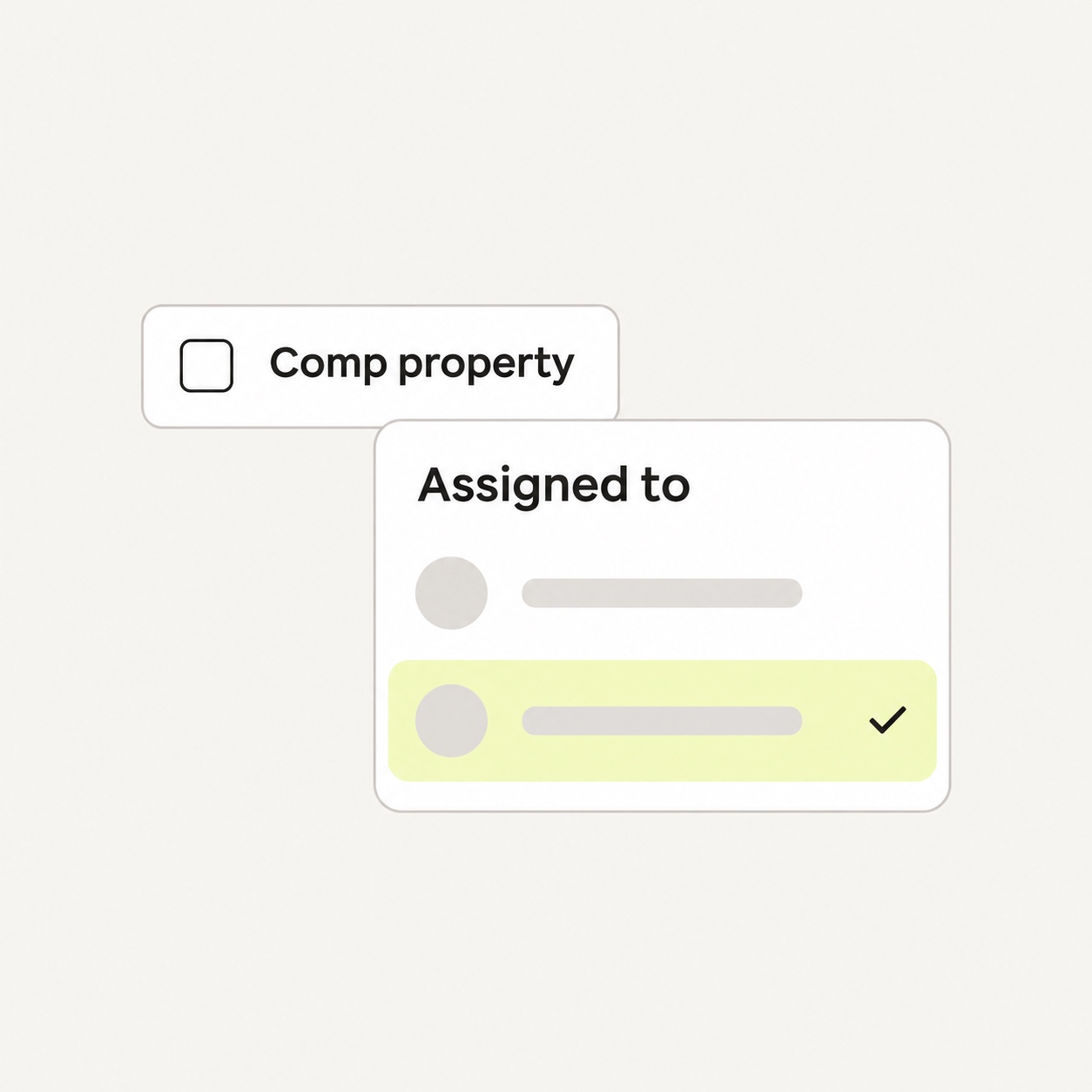
Assign a call, an offer review, or a document request to the person doing it. Give it a due date so they know when it needs attention.
Illustrative example. The Cedar Lane seller is expecting a call today. The closer is out, so the team assigns that call to Mia.
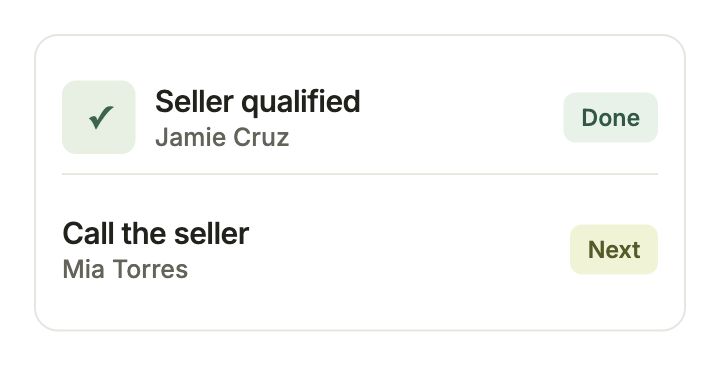
Mia opens the deal and reads the last offer and the note about the roof quote. She knows what the seller was told and which question is still open.
Mia records what the seller said and sets the next action. The closer can pick the work back up from there.
The workspace supports the seller lead, acquisitions, buyer-side, and closing work. One person can do several of those jobs.
Add it to the lead or deal doing the work. Include the last commitment, missing details, and the next dated action.
Yes. The lead manager can own the seller lead while the closer owns the acquisition deal.
Assign the task to the teammate covering it. If responsibility for the whole deal changes, update its owner too.
Use owner filters in Lead Manager and the pipeline. Open the deal’s tasks to see who is assigned to each action.
Check the teammate’s workspace access before a handoff. Ownership identifies who is doing the work.